
Google Maps is often the first trust checkpoint for local healthcare decisions.
If your clinic is not visible there, patients are more likely to choose the businesses that appear above you.
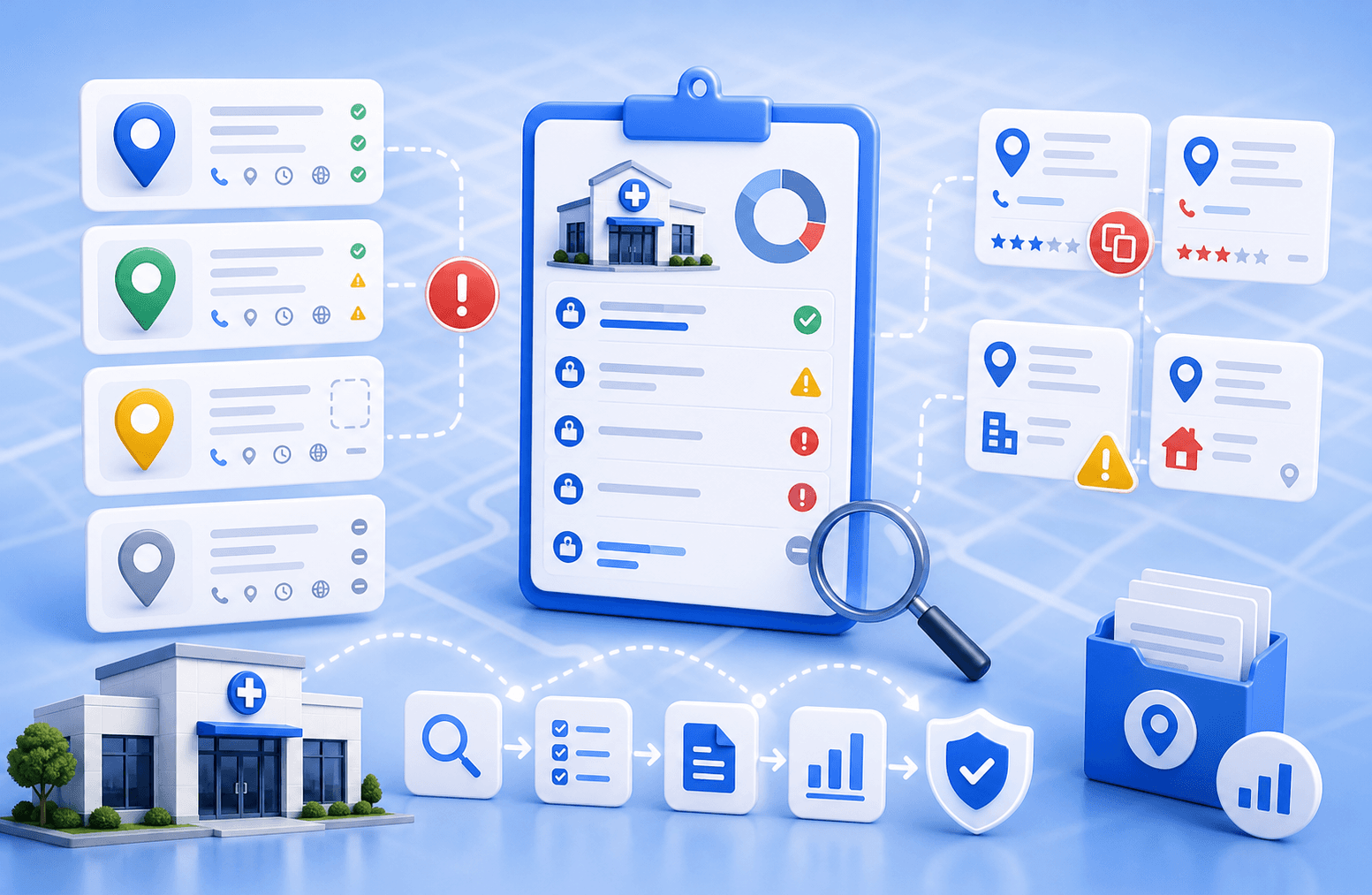
The most damaging citation gaps in clinic SEO audits are not always dramatic. Often, they are small inconsistencies that compound across listings until the clinic's trust profile starts to look unstable.
In audit work, we usually see the same patterns repeat: thin coverage in important sources, old business data still live after changes, duplicate or split identities, and directory profiles that exist but are too incomplete to help.
Guide overview
What you'll work through in this guide
Why this matters for clinics
Citation gaps matter because they weaken how consistently a clinic is represented across local discovery systems, review ecosystems, and third-pa...
What to check first
Before making tool or strategy decisions, review the local visibility system in this order:
Step-by-step workflow Curex recommends
Curex usually groups citation gaps into three buckets so the clinic can prioritize them more rationally.
That is why a citation audit should not only count listings. It should explain where the footprint is weak, conflicted, or under-maintained.
Why this matters for clinics
Citation gaps matter because they weaken how consistently a clinic is represented across local discovery systems, review ecosystems, and third-party trust sources.
In recurring audits, the biggest losses usually come from a few predictable issues rather than from one obscure directory error. That is good news because it means the clinic can often improve trust and local consistency by fixing the highest-impact gap categories first.
The hard part is knowing which gaps are mostly cosmetic and which ones keep creating ranking or trust drag.
The strongest teams usually evaluate this through a small set of operating questions:
- whether the clinic's core name, address, phone, and URL are consistent in the sources that matter most
- whether key high-trust listings are missing entirely or only partially built
- whether duplicates, moved-location records, or provider-level conflicts are still live
- whether the clinic has enough ownership and control over the listing footprint to keep it accurate
What to check first
Before making tool or strategy decisions, review the local visibility system in this order:
- Review the clinic's core identity fields in the highest-trust sources first.
- Check whether the footprint is thin, conflicted, or both.
- Look for duplicate, legacy, and moved-address records before expanding coverage.
- Separate low-impact formatting issues from the gaps that actually change trust and consistency.
The strongest audit is not the one with the longest spreadsheet. It is the one that shows what the clinic should fix first.
Step-by-step workflow Curex recommends
Curex usually groups citation gaps into three buckets so the clinic can prioritize them more rationally.
1Step 1: Fix identity conflicts first+
Old addresses, wrong phone numbers, duplicate profiles, and mixed business naming tend to create the most damaging trust issues.
2Step 2: Fill the missing high-trust coverage next+
Once the footprint is cleaner, use citation builder logic to strengthen the directories that matter most for local trust and patient discovery.
3Step 3: Build a maintenance habit instead of a one-time cleanup+
If the clinic has no ongoing ownership model, the gaps often return. That is why the free clinic SEO scan and clinic SEO NAP variations checks are useful as recurring guardrails.
Common mistakes to avoid
Mistake 1: Treating all citation gaps as equally urgent
A missing minor directory is rarely as harmful as conflicting phone numbers or duplicate core listings.
Mistake 2: Expanding coverage before the footprint is clean
More listings do not help much if the clinic is still spreading conflicting data.
Mistake 3: Assuming a one-time audit solves the problem forever
Moves, vendor changes, tracking numbers, and new locations can reopen old gaps if the clinic does not keep watch.
When to use Curex tools or services
What to do next
Choose the right Curex path for the issue
Start here
Start with Citation Builder
Use the scan when you need a quick read on whether the issue is visibility, listings consistency, or overall clinic SEO weakness.
ContinueOngoing optimization
Run Free Clinic SEO Scan
Use software-led workflows when the listing is live but the clinic needs stronger control over GBP updates, local signals, and monitoring.
ContinueHigh-risk cleanup
Citation Builder
Use the reinstatement path when suspension, verification failure, or policy-sensitive cleanup is part of the problem.
ContinueUse citation builder when the clinic has already identified the major gaps and is ready to improve or expand the footprint.
Use the free clinic SEO scan if the clinic first needs a broader local visibility baseline, and use clinic SEO NAP variations if the biggest concern is how identity inconsistencies are affecting trust.
That sequence helps the clinic move from diagnosis to cleanup without confusing volume with progress.
Final takeaway
The most common citation gaps in clinic SEO audits are usually identity conflicts, thin high-trust coverage, and weak ownership of the listing footprint.
The clinic that fixes those three areas first usually gets more value than the clinic that chases hundreds of low-priority directory submissions.
Methodology for Most Common Citation Gaps Found in Clinic SEO Audits
Last reviewed May 11, 2026This article is grounded in reviewed guidance, local SEO workflows, and the source material linked below.

Next step for local SEO growth
Move from reading to a clinic SEO action plan
Use the next Curex workflow to turn the article into an actionable growth path, whether you need a diagnostic scan, software support, or hands-on SEO help.
- Built for local healthcare visibility
- Clear path from diagnosis to implementation
- Flexible for software-led or service-led execution
Continue learning
Related Resources for Most Common Citation Gaps Found in Clinic SEO Audits
Use these supporting resources to go deeper into the topic cluster without losing the thread of what you just learned.
Related Curex resources
Practical resources to keep moving
Foundational guides, tools, and service paths that support the next stage of implementation.
More from this topic
Continue exploring this cluster
Supporting reads that deepen the same topic without competing with the main CTA above.